


Information Center
Installation assistance
Ordering at Aroha
Smoke Detector
How do I test my smoke detector?
All our detectors are tested in special simulation chambers before they leave the factory, so they have already been extensively tested in conditions that do not damage the sensors.
You yourself can test the smoke detector by pressing the test button.The entire front of the smoke detector is the (test) button.
Press the test button briefly and the alarm will go off. Now you know for sure that your smoke detector is working! To turn off the alarm, press the test button again.
Does the alarm not go off? Dust the smoke detector with a vacuum cleaner brush and try again. If the alarm stays off, contact us.
Note: You should only test a smoke detector in a specially designed simulation chamber or with a test spray, to avoid causing any damage to the device or your environment.
Never test your detector with an open flame! This can damage the sensor. Also e.g. cigarette smoke is unsuitable for testing smoke detectors, since the smoke detector does not go off at a light plume of smoke (to prevent false alarms caused by cigarettes, etc.), but at prolonged (several seconds) interruption of the light signal.
How do I maintain my smoke detector?
Test and clean the smoke detector once a month.
Do not paint the smoke detector, as paint closes the vents and interferes with the sensor’s ability to detect smoke.
Do not disassemble the smoke detector to clean e.g. the inside, as this will damage the smoke detector.
How do I clean my smoke detector?
Clean the smoke detector at least once a month to remove dust, dirt or debris. Use a vacuum cleaner with a soft brush and vacuum all sides and covers of the smoke detector.
How do I install my Safety Pro smoke detector?
To activate the smoke detector, press the entire front of the smoke detector (= test button) until the red LED lights up and a beep tone sounds; this takes at least 10 seconds.
After you release the test button, a green LED light on the front of the smoke detector flashes every minute. The smoke detector is now activated.
How do I install my Smart Connect smoke detector?
Learn more about installation, most common problems, and maintenance and cleaning:
Manual Aroha Smart Connect Smoke Detector
My Smart Connect smoke detector indicates via the app that it has a low battery, now what?
The first time the smoke detector is paired, the app may incorrectly display a low battery notification. Please disconnect the smoke detector and then pair it again. If the notification is given again for the app, contact us including screenshot of the notification in the app.
How do I install my Link smoke detectors?
Learn more about installation, most common problems, and maintenance and cleaning:
Manuals Aroha Link Smoke Detector
How do I install my Smart Connect & Link smoke detector?
Learn more about installation, most common problems, and maintenance and cleaning:
Manual Aroha Smart Connect & Link Smoke Detector
Does the smoke detector meet legal requirements?
Yes, all smoke detectors we sell comply with the European standard EN 14604. All detectors are also CE approved according to European requirements.
You can find all relevant certificates on the product pages of the respective smoke detector.
What should I do if my smoke detector alarms unexpectedly?
Check if there is any danger from smoke and/or fire nearby. Once danger is ruled out, press the test button to set silent mode.
To prevent future false alarms, clean and maintain the smoke detector as directed. Also consider hanging the smoke detector in another location, should it give a false alarm due to e.g. water vapors.
Carbon monoxide detector
How do I test my carbon monoxide detector?
Briefly press the test button on the front of the carbon monoxide detector and the alarm will go off. Now you know for sure that your detector is working! To turn off the alarm, press the test button again.
Does the alarm not go off? Clean the carbon monoxide detector of dust and try again. If the alarm stays off, contact us.
How do I maintain my carbon monoxide detector?
Test and clean the CO detector once a month.
Do not paint the CO detector, as paint seals the vents and interferes with the sensor’s ability to detect CO.
Do not disassemble the CO detector to clean e.g. the inside, as this will damage the CO detector.
How do I clean my carbon monoxide detector?
Clean the CO detector at least once a month to remove dust, dirt or debris. Use a vacuum cleaner with a soft brush and vacuum all sides of the CO detector.
How do I install my Safety Pro carbon monoxide detector?
Using the stick provided, turn the switch on the back of the CO detector to “ON”. The CO detector will beep and the LCD screen will light up blue, then the value will increase from 000 to 999. When the screen is at 0 ppm, the CO detector is activated.
How do I install my Smart Connect carbon monoxide detector?
Learn more about installation, most common problems, and maintenance and cleaning:
Manual Aroha Smart Connect Carbon Monoxide Detector
My Smart Connect carbon monoxide detector indicates via the app that it has a low battery, now what?
The first time the smart CO detector is paired, the app may incorrectly display a low battery notification. Disconnect the CO detector and then pair it again. If the notification is given again for the app, contact us including screenshot of the notification in the app.
How do I install my Link carbon monoxide detector?
Learn more about installation, most common problems, and maintenance and cleaning:
Manuals Aroha Link CO Detector
Does the carbon monoxide detector meet legal requirements?
Yes, all carbon monoxide detectors (CO detectors) we sell comply with European standard EN 50291-2. All detectors are also CE approved according to European requirements.
You can find all relevant certificates on the product pages of the respective CO detectors.
When does the carbon monoxide detector alarm?

A higher concentration of carbon monoxide is regularly released briefly in a home, such as when showering, cooking or when the geyser turns on. With proper ventilation in the home and properly functioning combustion appliances, carbon monoxide levels quickly drop back to the “normal” concentration. In order not to immediately sound the alarm in case of short-term high concentrations, a CO meter contains a timer. The time-weighted value of this is laid down in a European standard, with which our combination detector complies. When the concentration is present for a longer time or when the concentration rises further, the combination detector will alarm.

50 ppm
Alarm between 60 to 90 minutes

100 ppm
Alarm between 10 and 40 minutes

300 ppm
Alarm within 3 minutes
Why is the ppm value 0?
The default value is 0 ppm because the natural CO content in the ambient air is about 0.2 ppm. This is rounded to 0 ppm.
So the display always shows the real-time value of the amount of CO, but in a “normal” situation it is simply 0 ppm.
Combination detector
How do I test my combination detector?
All our detectors are tested in special simulation chambers before they leave the factory, so they have already been extensively tested in conditions that do not damage the sensors.
You yourself can test the combination detector by pressing the test button. The entire front of the combination detector is the (test) button.
Briefly press the test button and the alarm will go off. Now you know for sure that your combination detector is working! To turn off the alarm, press the test button again.
Does the alarm not go off? Dust the combination detector with a vacuum cleaner brush and try again. If the alarm remains off, contact us.
Note: You should only test a combination detector in a specially designed simulation chamber or with a test spray, to avoid causing any damage to the device or your environment.
Never test your detector with an open flame! This can damage the sensor. Also e.g. cigarette smoke is unsuitable for testing smoke detectors, since the smoke detector does not go off at a light plume of smoke (to prevent false alarms caused by cigarettes, etc.), but at prolonged (several seconds) interruption of the light signal.
How do I maintain my combination detector?
Test and clean the combination detector once a month.
Do not paint the combination detector, as paint closes the vents and interferes with the sensor’s ability to detect smoke and CO.
Do not disassemble the combination detector to clean e.g. the inside, as this will damage the combination detector.
How do I clean my combination detector?
Clean the combination detector at least once a month to remove dust, dirt or debris. Use a vacuum cleaner with a soft brush and vacuum all sides of the combination detector.
How do I install my Safety Pro combination detector?

Rotate the back (mounting bracket) of the combination detector until the lines on the side align, as shown. You can now remove the mounting bracket.
To activate the combination detector, turn the switch on the back of the detector to “ON” and it will beep. The combination detector is now activated.

How do I install my Smart Connect combination detector?
Learn more about installation, most common problems, and maintenance and cleaning:
Manuals Aroha Smart Connect Combination detector
My Smart Connect combination detector indicates via the app that it has a low battery, now what?
The first time the smart combination detector is paired, the app may incorrectly display a low battery notification. Disconnect the combination detector and then pair it again. If the notification is given again for the app, contact us including screenshot of the notification in the app.
How do I install my Link combination detector?
Learn more about installation, most common problems, and maintenance and cleaning:
Manuals Aroha Link Combination detector
Does the combination detector meet the legal requirements?
Yes, all smoke detectors we sell comply with European standard EN 14604 and 50291-2. All detectors are also CE approved according to European requirements.
You can find all relevant certificates on the product pages of the respective combination detector.
When does the combination detector alarm when there is an increased carbon monoxide concentration?
A higher concentration of carbon monoxide is regularly released briefly in a home, such as when showering, cooking or when the geyser turns on. With proper ventilation in the home and properly functioning combustion appliances, carbon monoxide levels quickly drop back to the “normal” concentration. In order not to immediately sound the alarm in case of short-term high concentrations, a CO meter contains a timer. The time-weighted value of this is laid down in a European standard, with which our combination detector complies. When the concentration is present for a longer time or when the concentration rises further, the combination detector will alarm.
50 ppm
Alarm between 60 to 90 minutes
100 ppm
Alarm between 10 and 40 minutes
300 ppm
Alarm within 3 minutes
What should I do if my combination detector alarms unexpectedly?
Check if there are any nearby hazards from smoke and/or fire. If not, open windows and doors to air the room – after all, you can’t see or smell carbon monoxide. Once danger is ruled out, press the test button to set silent mode.
To prevent future false alarms, clean and maintain the combination detector as directed. Also consider hanging the combination detector in another location should it trigger a false alarm due to water vapor, for example.
Smoke detectors and carbon monoxide detectors in Europe
What are the legal obligations?
Many European countries require the installation of smoke detectors – and increasingly carbon monoxide detectors. But what exactly are the rules in each country? We list the most important obligations within the European Union and the United Kingdom for you. So you know exactly where you stand.

Netherlands
Since 2022, it is mandatory to install at least one smoke detector in all homes on every floor with an accommodation area. The detectors must comply with standard EN 14604 and may be battery or mains powered. Aroha smoke detectors meet the applicable standards and requirements in the Netherlands.

Belgium
Since 2020, it has been mandatory to install at least one smoke detector on each floor in all homes. The detectors must comply with EN 14604 and be equipped with a 10-year fixed battery or connected to mains power. Aroha smoke detectors meet the standards and requirements in force in Belgium.

Germany
Since 2016 (depending on state), it has been mandatory to install smoke detectors in bedrooms, children’s rooms and escape routes in all homes. The detectors must comply with EN 14604. Aroha smoke detectors meet the applicable standards and requirements in Germany.

Italy
There is no national legal obligation to install smoke detectors in private homes.
Since 2023, it is mandatory to install carbon monoxide detectors in tourist rental units with gas appliances. The detectors must comply with EN 50291. Aroha carbon monoxide detectors and combination detectors comply with the standards and requirements in force in Italy.

France
Since 2015, it has been mandatory to install at least one smoke detector in every home. The detector must be CE marked and comply with standard EN 14604. Aroha smoke detectors meet the standards and requirements in force in France.

United Kingdom
Since 1992 it has been mandatory to install smoke detectors in new homes and since 2022 in all rented housing in England. The detectors must comply with EN 14604 (battery models) or BS 5839-6 (for wired systems). In Scotland, interconnection is mandatory. Since 2022, it is also mandatory in England to install carbon monoxide detectors in rental properties where fixed combustion appliances are present. Aroha detectors meet applicable standards and requirements in England. Aroha Link detectors meet applicable standards and requirements in Scotland.

Ireland
Since 2008, it has been mandatory to install smoke detectors in all new construction and in existing homes undergoing major renovation. The detectors must comply with IS 3218 or EN 14604, and preferably with interconnection.
Carbon monoxide detectors have been a legal requirement in all homes with fixed combustion appliances since 2019.
Aroha (Link) detectors meet current standards and requirements in Ireland.

Sweden
Since 1999, it has been mandatory to install smoke detectors in all new construction homes. For existing homes, it is the owner’s responsibility to install at least one smoke detector per floor. The detectors must comply with EN 14604. Aroha smoke detectors meet the applicable standards and requirements in Sweden.
optimal security in your home
How do you best protect your home from fire and carbon monoxide poisoning?
A well-secured home starts with reliable detectors in the right places. Whether smoke, heat or carbon monoxide – each type of detector has its own function and ideal place in the home. With detectors from Aroha , you choose innovative, certified safety that meets the strictest European standards.
Here you can read about where best to place which detector, how many you need, and what to look out for for optimal protection of your home and family.

Indispensable in any home
Smoke Detectors
Smoke detectors save lives. They immediately sound the alarm when smoke develops, often within the first few minutes of a fire. In many European countries it is a legal requirement to have smoke detectors in the home.
Aroha’s smoke detectors use photoelectric (optical) detection technology. Inside the detector is an infrared light beam that is interrupted or scattered by smoke particles. As soon as that happens, the alarm is activated. This technology is particularly effective in detecting smoldering fires early – the type of fire most often found in residential homes.
Smoke detector on the landing or hallway
The hallway and landing are usually the escape routes in the event of a fire. Smoke development in these areas can literally block your way out. A smoke detector in the hallway or on the landing warns you as soon as smoke develops on these crucial passages. Especially in multi-story homes, it is important to install at least one detector on each floor.
Smoke detector in the living room
The living room is a place where electrical appliances, candles, fireplaces or other possible sources of fire are present. Since we often spend long periods of time here, it is important to secure this area as well. A smoke detector in the living room ensures that incipient fires are quickly detected, whether you are asleep in another room or just at home but distracted for a moment.
Shop smoke detectorsSmoke detector in the bedroom
While sleeping, your sense of smell is turned off, so you do not detect smoke or fire odors. If a fire develops in the hallway or adjacent room, it may be too late before you wake up – unless an alarm goes off directly in the room. That’s why we recommend installing a smoke detector in each bedroom. For added comfort here, it’s best to choose an Aroha Sleep Line model without a flashing LED light, so your sleep won’t be disturbed by a standby LED.
Shop bedroom-friendly smoke detectorsIdeal for kitchen and garage
Heat Detectors
In some areas of the home, smoke detectors are less suitable, such as a kitchen, bathroom or garage. Here, steam, cooking vapor or dust can quickly cause a false alarm. A heat detector offers the ideal solution in such situations.
Whereas a smoke detector reacts to smoke particles in the air (refracting light), a heat detector works on the basis of temperature. As soon as the temperature exceeds a set threshold – around 58°C – or rises rapidly over a short period of time, the alarm sounds. This makes a heat detector reliable in environments where smoke or vapor are more common, but where fire is just as likely to occur.
Heat detector in the kitchen
The kitchen is often at greater risk of fire than other parts of the home. Think overheated pans, flame in the pan or faulty appliances. At the same time, there is a lot of vapor and smoke during cooking that has nothing to do with fire. A smoke detector would often wrongly alarm here. A heat detector does not – it only reacts when a real fire develops. This keeps you well protected, without the inconvenience of unnecessary alarms.
Heat detector in the garage or storage room
Spaces such as garages, utility rooms and storerooms often contain electrical appliances, chargers, combustible materials or heating systems. Although people are not always present, the risk of fire is real. Because these spaces can also be dusty or damp, a heat detector here is usually more reliable than a smoke detector.
Heat detector in the bathroom
Steam from a shower can easily activate a smoke detector, especially in smaller bathrooms without proper ventilation. Although the fire risk is lower here, it is still wise to opt for a heat detector if you have electric floor heating, clothes dryers or appliances in the bathroom.
Shop heat detectors
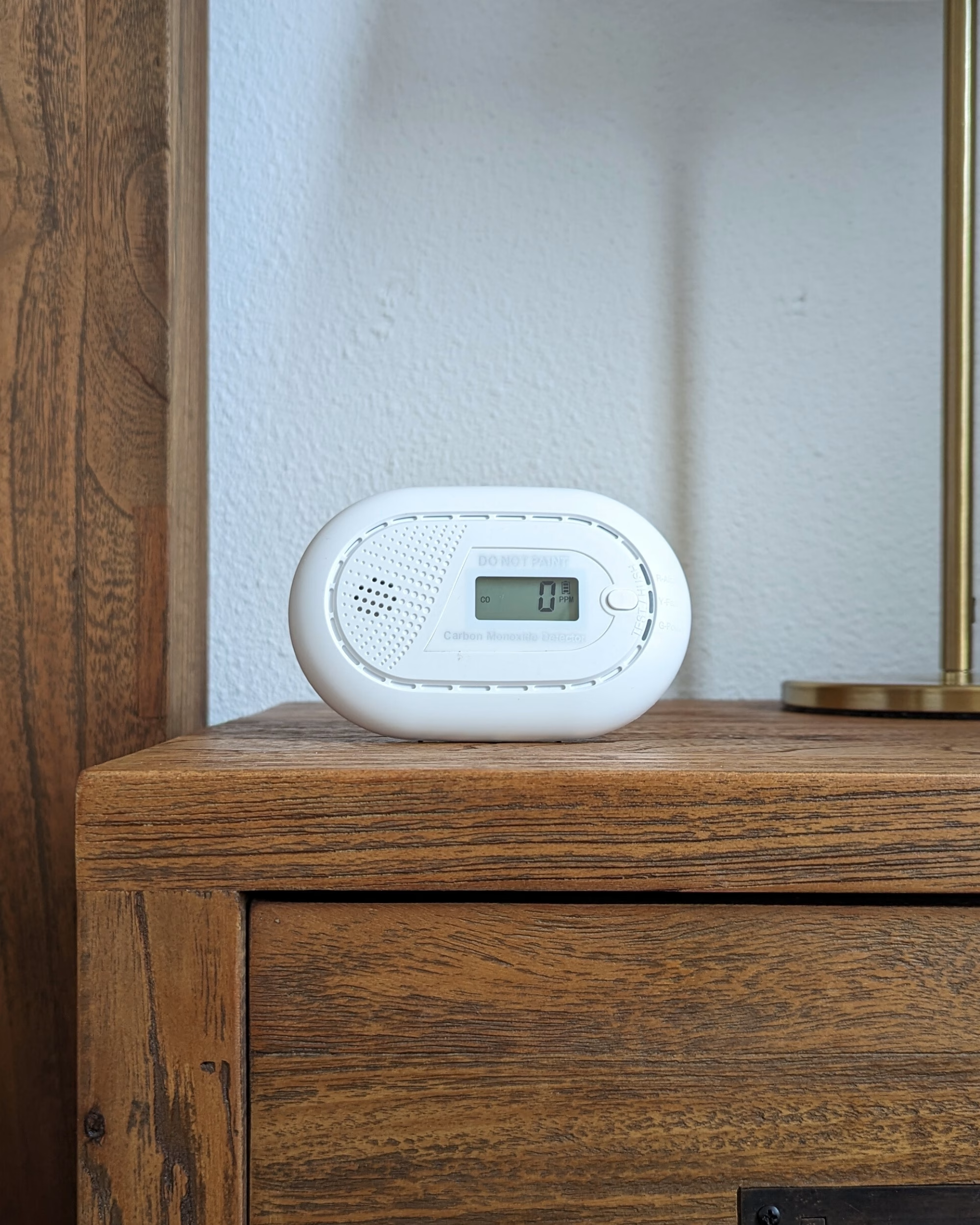
Protect against carbon monoxide poisoning
Carbon monoxide detectors
Carbon monoxide (CO) is a life-threatening, odorless and invisible gas produced by incomplete combustion of fuels such as gas, wood, oil or coal. Because you can’t smell it or see it, CO is also known as the silent assassin. Therefore, a carbon monoxide detector is vital in any home where combustion appliances are present.
CO can be released from central heating boilers, gas stoves, geysers, fireplaces and wood stoves, among others. If these appliances are poorly maintained or if there is inadequate ventilation, the toxic gas can accumulate in the home. Even modern appliances can be dangerous if the exhaust is not working properly.
Carbon monoxide detector in room with combustion appliance
A carbon monoxide detector definitely belongs in any room where there is a combustion appliance, such as central heating boilers, geysers, fireplaces or gas stoves. A detector near the appliance ensures that you are immediately alerted to the smallest leak. This gives you the chance to act quickly – by ventilating, turning off the appliance and calling in professional help. Without this warning, symptoms such as headaches, dizziness and nausea can worsen unnoticed, with all the ensuing consequences.
Carbon monoxide detector in the bedroom
Carbon monoxide poisoning can occur at night while residents are sleeping and not notice anything. Therefore, it is important to install a CO detector or combination CO and smoke detector in bedrooms as well, especially if a combustion appliance is present in or near the room.
Shop carbon monoxide detectorsSmart 2-in-1 solution.
Combination Detectors
A combination detector is a smart solution that detects both smoke and carbon monoxide. This makes a combination detector ideal for areas where both risks are present, such as in homes with combustion appliances like fireplaces, pellet stoves or central heating boilers. Instead of installing two separate detectors, a combination detector provides protection against both fire and carbon monoxide poisoning in one compact device.
Combination detectors work with two different sensors: a photoelectric sensor for detecting smoke particles and an electrochemical sensor that detects carbon monoxide in the air. Both sensors function independently of each other and immediately sound the alarm as soon as either hazard is detected. This ensures that you are alerted in time, whether it is an incipient fire or a dangerous CO leak.
Combination detector in room with combustion appliance
These detectors are particularly suitable for areas where smoke and carbon monoxide can both occur. Think of a living room with a wood-burning stove or a technical room with a central heating boiler. In such situations, it is not always practical or aesthetic to hang multiple detectors. A combination detector saves space, is easier to install and offers maximum safety.
Combination detector in the bedroom
Carbon monoxide poisoning can occur at night while residents are sleeping and not notice anything. Therefore, it is important to install a CO detector or combination CO and smoke detector in bedrooms as well, especially if a combustion appliance is present in or near the room.
Shop combination detectors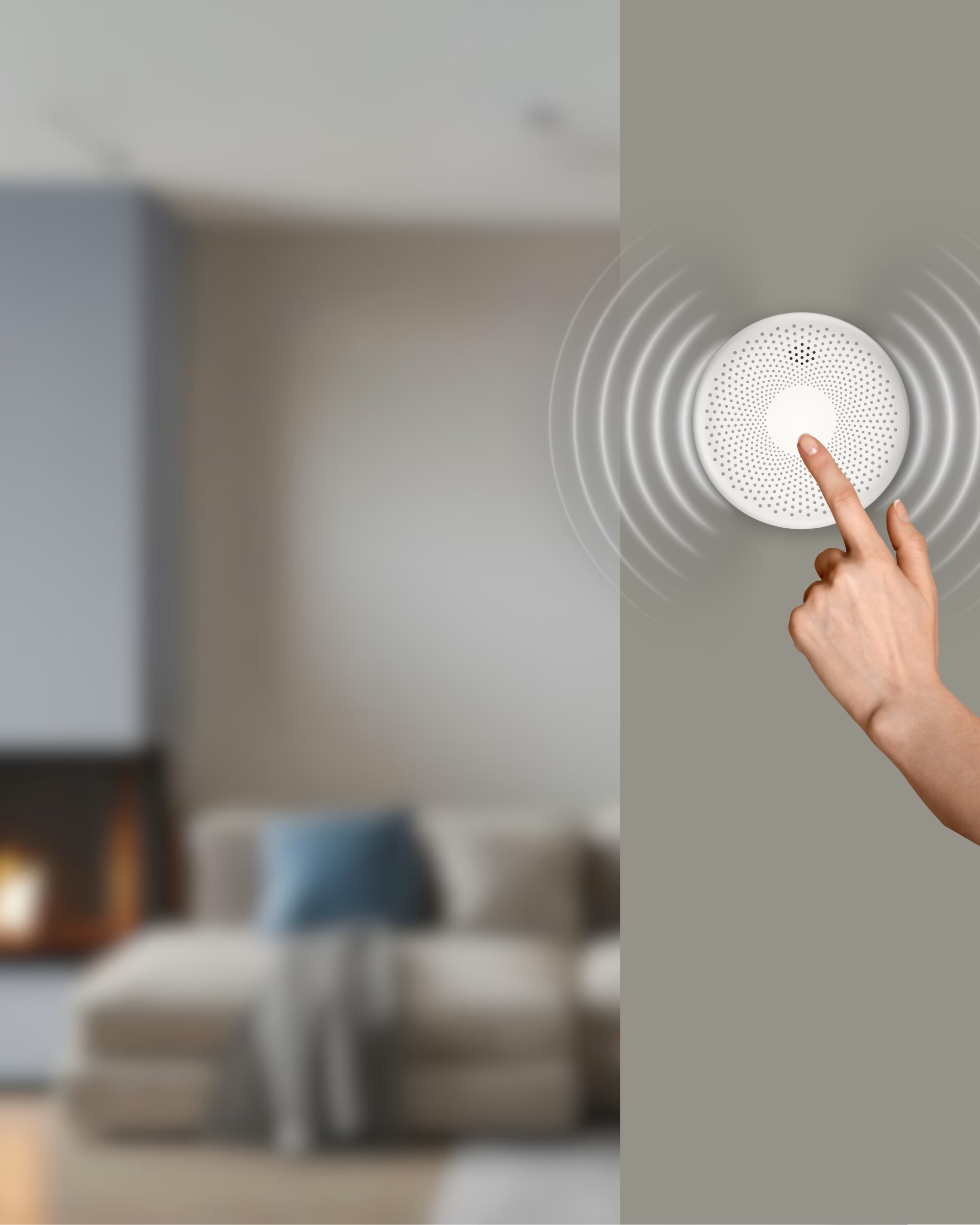
Aroha Link
Safety at the highest level with interconnectable detectors
For optimal security in your home, it is important that you can hear the 85 dB alarm signal well everywhere, no matter where the danger arises. That’s why we recommend interconnectable detectors, such as our Aroha Link series. These smoke, heat, CO and combination detectors communicate wirelessly with each other, so that if one detector sounds the alarm, all linked detectors in the home immediately join in. So you are always alerted on time anywhere in the house, even if the danger occurs in another room.
Interconnection significantly increases security, especially in larger homes or multi-story houses. Without linkage, you may not hear an alarm in, say, the garage or attic when you are in another room. With Aroha Link, you are assured of an integral alert system that better protects you and your family.
Modern technology & ultimate ease of use
Our Aroha detectors are also equipped with modern technology and are designed with ease of use and reliability in mind. For example, they feature a long service life thanks to built-in 10-year batteries, so you don’t have to worry about replacing batteries regularly. In addition, our detectors are easy to install and connect without complicated settings, saving time and eliminating frustration.
Choosing Aroha means choosing quality, innovation and security that thinks with you. By investing in our interconnectable smoke, heat, carbon monoxide and combination detectors, you ensure a complete and future-proof alarm system that meets all European safety standards. So you are always prepared, wherever you are in your home.

Prefer to receive customized advice?
Talk to one of our experts for personalized advice or immediate assistance.
Contact